
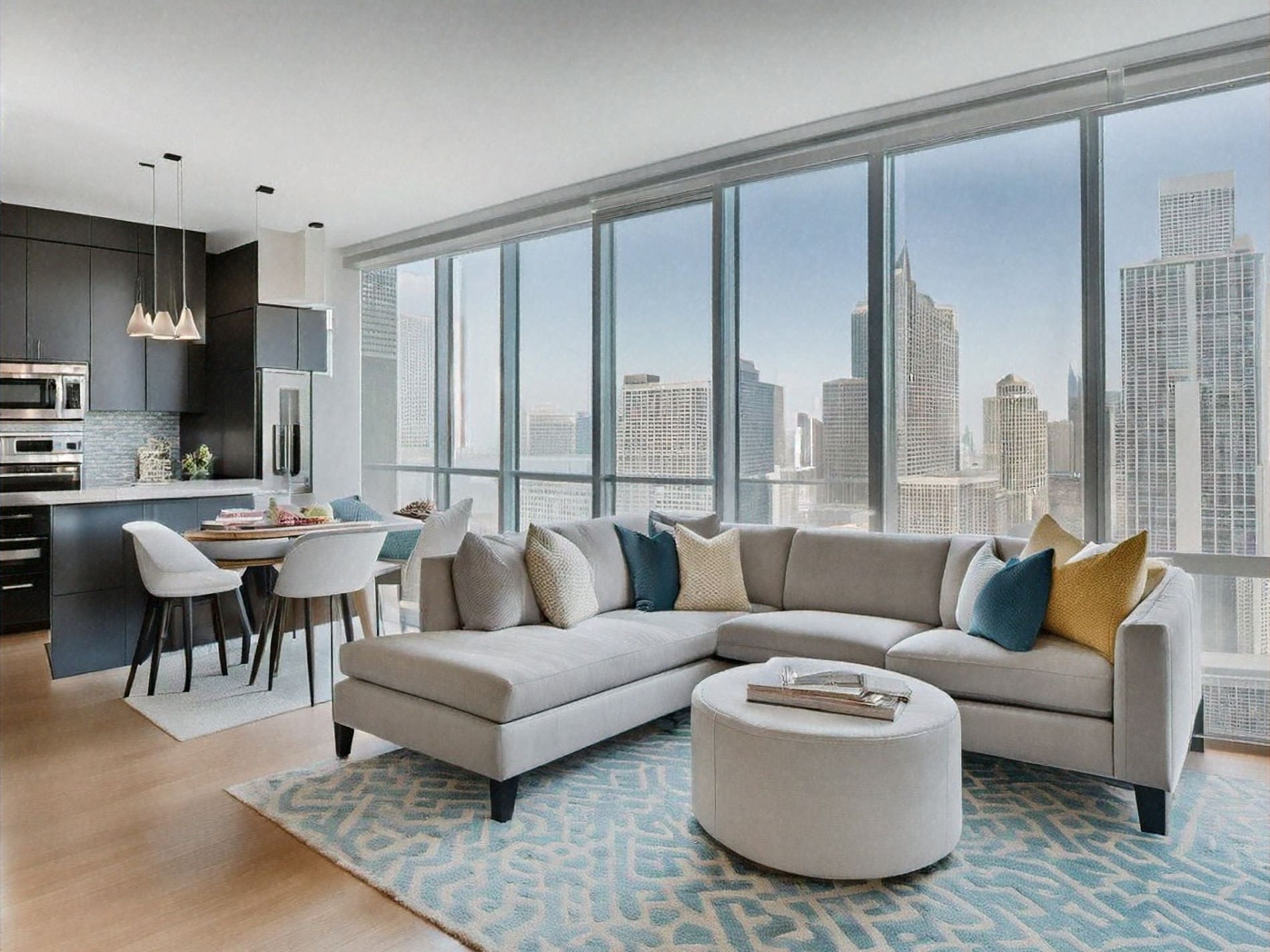
Attainable Luxury in Chicago: What Buyers Need to Know
Luxury Chicago condos under $750K are real, and in 2026 they represent one of the most compelling segments of the market. Buildings with doorman service, indoor pools, fitness centers, and premium finishes are available in the $500K-$750K range — concentrated in South Loop, Lakeshore East, and West Loop — if you know what to look for and where to look.
Building types that deliver: Established luxury buildings with strong reserves, buildings that have recently completed major capital improvements, and select construction from 2000-2015 where developer timelines and market positioning created this price point. Buildings like The Grant and Marina Towers consistently deliver genuine luxury amenities at this price.
Amenity standards: Expect doorman service, a well-equipped fitness center, indoor pool, rooftop deck, and package management. What you likely won't get: full concierge versus doorman, valet parking, private wine cellars, or golf simulators. The gap between $750K luxury and $1.5M+ luxury is service intensity and exclusivity — not the presence of core amenities.
HOA reality: Luxury buildings typically run $0.50-$0.75/sq ft in monthly fees, but many include utilities, doorman staffing, and amenity maintenance. A 1,200 sq ft unit might cost $600-$900/month in HOA — often competitive with non-luxury buildings once you add the utilities those buildings don't include.
Investment dynamics: The $500K-$750K luxury segment has appreciated 15-25% since 2020 in Chicago's strongest neighborhoods. Doorman buildings command premium rents and sell faster. The dual demand from owner-occupants and investors creates liquidity that non-doorman buildings in the same neighborhoods can't match.
Bottom line: This market rewards buyers who understand building financials and management quality over those chasing the longest amenity list or the newest lobby. The best values are in well-managed buildings with strong reserves in neighborhoods with solid fundamentals — and they require real due diligence to find.
What Defines Luxury Under $750K in Chicago?
After 20+ years selling Chicago condos, I've learned that luxury at the $750K price point is about substance over marketing. True luxury means 24-hour doorman coverage — not just a lobby monitor during business hours. It means a fitness center with equipment that actually works, maintained and cleaned regularly, with enough capacity for peak evening demand. It means an indoor pool that's open and heated year-round, not a seasonal amenity closed half the year for repairs.
The buildings that consistently deliver at this price share a few characteristics: strong HOA reserves, active boards that invest in the property, professional management companies, and recently completed or planned capital improvements. These aren't usually the flashiest buildings or the ones with the longest amenity lists. They're the ones with sustainable operations and realistic expectations.
What you won't typically find under $750K: full concierge service, valet parking, private wine storage, or resort pools with cabanas. Those appear in buildings starting around $1M+ per unit. The difference is service intensity, not fundamental building quality.
On doorman service specifically: this isn't just about someone opening doors. A staffed doorman building provides security, package management, visitor screening, and accountability that self-managed buildings can't replicate. It's one of the primary drivers of why doorman buildings command premium rents and maintain resale values better than comparable non-doorman properties.
For pools: before you factor indoor pool access into your decision, verify the operational schedule and maintenance history. Some buildings advertise pools that spend more time closed for repairs than open. Same goes for rooftop decks — the best ones have functioning grills, adequate shading, and well-maintained furniture. The worst have broken equipment and wind-tunnel exposure that residents stop using after the first year.
Neighborhoods: Where to Find Attainable Luxury
South Loop is Chicago's headquarters for attainable luxury. Multiple buildings from the early 2000s construction boom offer full-service amenity packages at prices 30-40% below comparable buildings in River North or Streeterville. The Grant and Museum Park I and II deliver serious amenity packages — doorman, pool, fitness, rooftop — with manageable HOA fees. Grant Park access, museum proximity, and strong transit round out the lifestyle value. Buyers who purchased South Loop luxury in the $400K-$600K range five years ago are largely sitting on $600K-$800K valuations today.
Lakeshore East offers newer construction luxury at accessible prices, particularly buildings from the mid-2000s that have established track records. The neighborhood's master-planned development ensures consistent aesthetics, maintained parks, and long-term stability. The trade-off is location — slightly removed from core downtown nightlife. If you value modern infrastructure, park access, and a quieter residential feel over being steps from hundreds of restaurants, it's excellent value. If you want River North energy, you'll know it.
West Loop luxury under $750K typically comes through loft conversions with exposed brick, high ceilings, and authentic Chicago character rather than resort amenity packages. Loft buildings here offer modern kitchens, quality finishes, and more personality than typical high-rises. The neighborhood's proximity to major employers (Google, McDonald's HQ) and Chicago's best restaurant scene drives strong rental demand for investors.
Downtown Chicago occasionally yields units under $750K in older full-service buildings, particularly smaller 1-bedrooms or units needing updates. Marina Towers consistently offers iconic architecture with doorman service under this price point. The liquidity advantage is real: downtown luxury buildings have the deepest buyer pools and fastest sales when it's time to exit.
Building Quality: What Separates Winners from Regrets
In this price range, building quality matters more than amenity count. I've seen buyers get seduced by impressive amenity lists only to discover pools closed half the year, fitness equipment that doesn't work, and deferred maintenance issues generating special assessments within two years of closing. The markers of quality aren't always visible during a single showing.
Financial health: Strong reserves are the foundation. A building should maintain reserves equal to at least 10-15% of the annual budget — more for older buildings with aging systems. Review the reserve study, which outlines major building systems, their remaining useful life, and planned replacement costs. Buildings without a recent reserve study (updated within 3-5 years) or with significant funding shortfalls should raise concerns. HOA fee trends matter too: increases of 20-30% over three years without corresponding improvements signal management issues. Normal is 2-4% annually.
Recent special assessments aren't automatically disqualifying. Buildings that recently completed elevator modernization, facade work, or mechanical system upgrades often represent excellent value — the work is done, and you're buying into updated systems. Just verify what was actually completed versus promised.
Management and board quality: Professional management companies bring systems and accountability that self-managed buildings lack. Board meeting minutes are public documents for unit owners — review recent ones to understand what issues the board addresses, how they make decisions, and whether they're planning proactively or reacting to problems. High board turnover or frequent management company changes signal governance issues worth investigating before you commit.
The age and condition trade-off: Buildings from the 1960s-1980s often have superior concrete and steel construction with larger unit sizes, but aging systems that require attention. The 1990s-2000s sweet spot buildings are old enough to have proven management and known issues, new enough that major systems still have useful life. Buildings from 2005-2015 offer modern amenities and systems with 10-20 year track records — verify these have transitioned to owner control and resolved any developer punch-list items.
Investment Analysis: Returns and Rental Reality
Luxury condos under $750K occupy a useful investment position: expensive enough to command premium rents from professional tenants, affordable enough to cash flow reasonably if you manage expenses well. The investment thesis typically combines modest rental income with steady appreciation in Chicago's strongest neighborhoods.
Current rental rates for luxury 1-bedrooms run $2,200-$2,600 in South Loop, $2,300-$2,700 in Lakeshore East, and $2,400-$2,800 in West Loop. Two-bedrooms in doorman buildings rent in the $2,800-$3,400 range. Units with private balconies, updated kitchens, and in-unit laundry command premiums. Buildings near major employers or transit see stronger demand and less seasonal vacancy.
The rental math on a typical deal: purchase a 1-bedroom for $600K with 20% down ($120K). Monthly costs run approximately $2,400 mortgage + $650 HOA + $250 property taxes + $100 insurance = $3,400. Rental income of $2,500-$2,600 creates an $800-$900 monthly shortfall before vacancy and maintenance. This negative cash flow is normal for luxury condo investments in Chicago's strong neighborhoods. The thesis is equity buildup through mortgage paydown plus appreciation — in neighborhoods appreciating 3-5% annually, the $600K purchase approaches $750K-$800K over 10 years while tenants cover most carrying costs.
For investment-specific considerations: target buildings with 30-40% investor concentration maximum. Buildings with 50%+ investor owners face conventional financing challenges that limit your eventual buyer pool to cash buyers and portfolio lenders. Well-known buildings like Marina Towers or The Grant offer resale liquidity advantages — buyers recognize the name and have confidence in the product. Garage parking availability broadens your buyer and renter pool; verify availability, costs, and whether parking transfers with the unit or is separate.
The Buyer Process: What to Expect
Luxury condo purchases involve more steps than typical residential transactions. Most buildings require board approval before closing — not a formality. Boards review your financial situation, verify you meet building standards, and confirm you understand building rules. Typical requirements include a completed board application, signed purchase contract, proof of financing, personal financial statements, credit report, employment verification, and references. Some buildings require face-to-face interviews. Budget 2-4 weeks for the approval process after submitting complete documents.
Buildings can reject buyers who meet lender standards but fall short of building requirements. Common reasons: debt-to-income ratios above 40-45%, insufficient reserves after closing, or employment situations that raise stability concerns. Know the building's financial requirements before making offers — your broker should have this information or be able to obtain it.
Standard home inspections cover your unit but miss building-level issues. Your due diligence should include: building financials for the past 2-3 years, the reserve study, engineering reports from the past 5 years, special assessment history, board meeting minutes for the past 12 months, current rental policies, recent sales comps, and insurance coverage. Reserve fund trends are particularly telling — declining reserves despite regular contributions signal higher expenses than budgeted or improper use of capital funds. Both are problems.
Frequently Asked Questions
Can you really find luxury condos in Chicago for under $750K?
Yes — genuine luxury with doorman service, indoor pools, and premium finishes is available in the $500K-$750K range, concentrated in South Loop, Lakeshore East, and West Loop. Buildings like The Grant and Marina Towers regularly have inventory in this range. The key is knowing which buildings deliver real amenities versus marketing-grade ones.
What neighborhoods have the most luxury condos under $750K?
South Loop has the deepest inventory at this price point, with multiple full-service buildings from the early 2000s. Lakeshore East offers newer construction luxury with established track records. West Loop delivers luxury finishes in loft conversions and newer buildings. Downtown Chicago broadly — including older River North buildings — has the most combined inventory if you're flexible on exact location.
What luxury amenities should I expect under $750K?
24-hour doorman service, well-equipped fitness center, indoor pool, rooftop deck with grills, package management, and bike storage are standard at quality buildings in this range. What you likely won't get: full concierge versus doorman, valet parking, or resort-style amenities like golf simulators or wine cellars. Focus on whether the amenities that exist are well-maintained, not how many are listed on the marketing brochure.
Are HOA fees higher in luxury buildings under $750K?
Not necessarily. Typical fees run $0.50-$0.75/sq ft — $600-$900/month for a 1,200 sq ft unit. Many include heat, AC, water, cable, and internet, making the total cost competitive with non-luxury buildings where you pay utilities separately. Always compare total monthly costs — mortgage + HOA + utilities + parking + insurance — not HOA fees in isolation.
Do luxury condos under $750K appreciate well?
The $500K-$750K segment has appreciated 15-25% since 2020 in South Loop, Lakeshore East, and West Loop. Well-managed buildings with strong reserves in neighborhoods with improving fundamentals tend to outperform. Buildings with deferred maintenance or rising special assessments underperform regardless of purchase price.
Which buildings offer the best value under $750K?
The Grant in South Loop consistently delivers full amenities at accessible prices. Museum Park towers offer Grant Park access with solid building fundamentals. Marina Towers provides iconic architecture and doorman service with river views. MDA City Apartments in Streeterville offers modern luxury with exceptional views. In Lakeshore East, mid-2000s buildings provide modern amenities with proven management histories.
Can I rent out a luxury condo under $750K for profit?
Rental income at this price point typically covers most but not all monthly carrying costs — expect to be cash-flow neutral or modestly negative while building equity and appreciation. A $600K 1-bedroom might rent for $2,400-$2,800 in strong neighborhoods, against total monthly costs around $3,400. The investment thesis is appreciation plus equity paydown, not immediate cash flow. Verify building rental policies before purchasing if income is part of your plan — many luxury buildings restrict short-term rentals and require board approval for tenants.
What's the minimum down payment for a luxury condo under $750K?
As low as 3-5% for primary residences with conventional financing, though 10-20% is more typical at this price point and earns better rates. Investment purchases require 15-25% minimum. Note that many luxury buildings impose stricter requirements than your lender — minimum credit scores of 680-720+, debt-to-income caps, and 12-24 months of reserves post-closing. The board's financial standards may be harder to meet than your mortgage approval.
Are older luxury buildings under $750K a good investment?
Often yes — buildings from the 1960s-1990s frequently have superior concrete and steel construction, larger unit sizes, and lower prices than new construction. The risks are aging systems and potential special assessments. Before buying, review the reserve study, special assessment history, and capital improvement plans. Buildings that have recently completed major renovations are often the best value: the work is done and you're buying updated systems at pre-renovation prices.
How do I know if a building's amenities are actually maintained?
Visit multiple times at different hours and days — including weekday evenings when the fitness center should be busiest. Check whether the pool is actually open and heated. Look at common area condition honestly, not through a marketing lens. Ask current residents directly. Review board meeting minutes for amenity repair discussions. Check capital expenditure line items in building financials — buildings that invest in maintenance show it in the numbers.
What are the red flags in luxury buildings under $750K?
Rental unit percentage above 50%, recent or pending special assessments, reserves below 10% of annual budget, declining sales prices over multiple years, visible deferred maintenance in common areas, high board turnover or frequent management company changes, and units sitting 120+ days on market well below neighborhood averages. Always review 2-3 years of financial statements, recent engineering reports, and board meeting minutes before committing to any building.
Disclaimer: The information in this article is based on current Chicago real estate market conditions, regulations, and industry practices as of January 2026. Real estate markets, prices, regulations, HOA fees, property taxes, and building policies can change. Past performance does not guarantee future results. Real estate investments carry risks including market fluctuations, unexpected expenses, and potential loss of capital. Always verify specific details with qualified professionals including licensed real estate brokers, real estate attorneys, mortgage lenders, tax advisors, and financial planners before making investment decisions. This article is for educational purposes and should not be considered legal, financial, tax, or investment advice.
Posted by Helaine Cohen on
Enjoy this blog post? Click here to subscribe for updates
Leave A Comment